
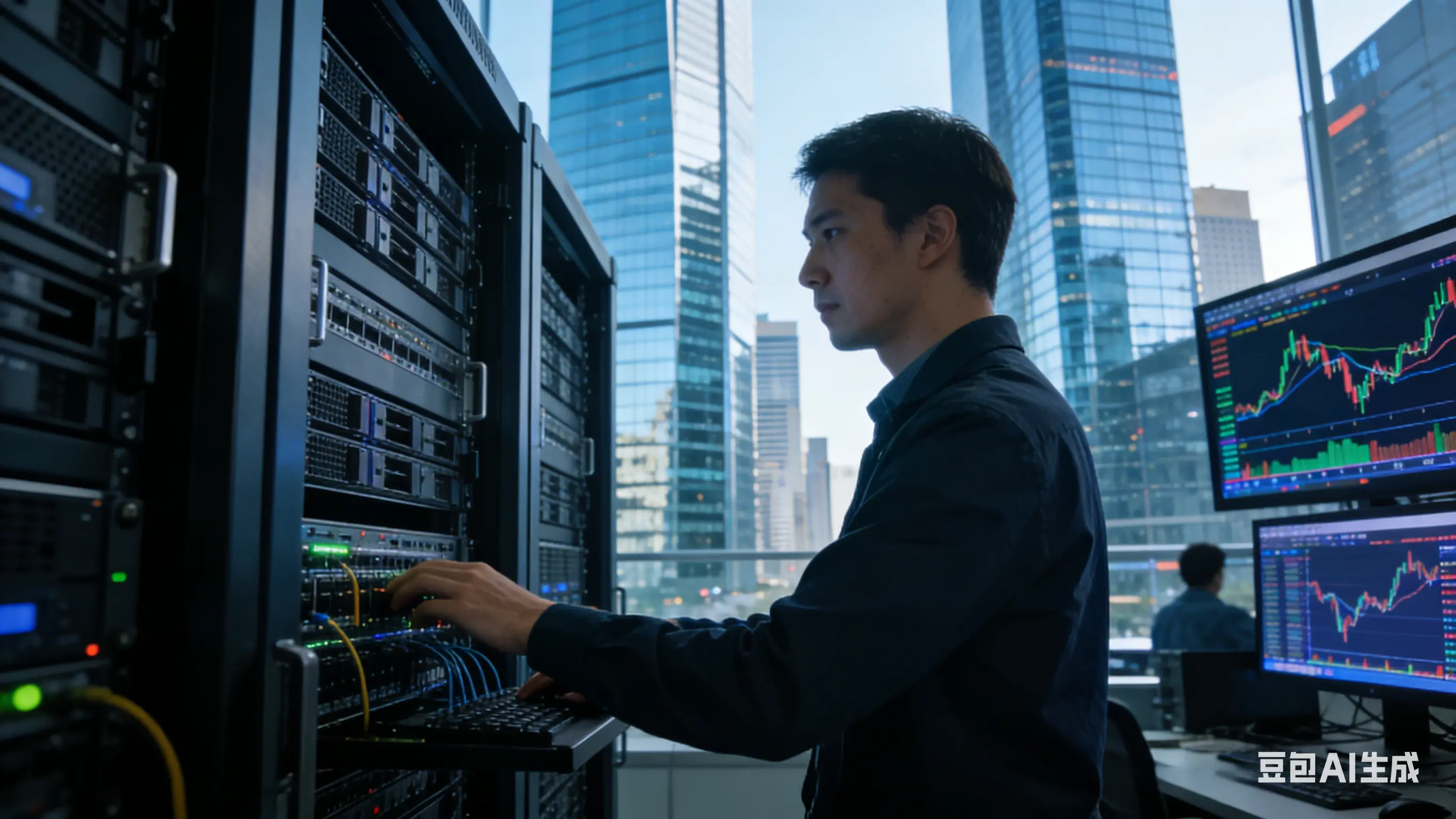
Abstract Currently, the global data center industry is undergoing a profound transformation driven by artificial intelligence. On the one hand, the demand for AI computing power has ignited an unprecedented investment boom, with global related investments expected to reach $3 trillion over the next five years, and the industry is entering a super-expansion cycle. On the other hand, challenges such as power bottlenecks, infrastructure resilience, and environmental pressures are becoming increasingly prominent, forcing the industry to undergo a comprehensive restructuring from underlying technologies to operating models. Next-generation data centers are evolving towards hypernode architecture, full-stack liquid cooling, and autonomous operation. Only by finding a balance between technological innovation and sustainable development can they gain a competitive edge in this transformation.
I. Development Trends: Super Investment Cycle and AI-Driven Restructuring
The global data center industry is standing at a historic turning point. The demand for computing power, represented by generative AI, is pushing this traditional infrastructure industry into an unprecedented wave of investment and transformation.
Market Size and Investment Surge
According to Moody's forecast, global data center-related investments will reach at least $3 trillion over the next five years (until 2030), a figure that underscores the industry's historic status. JLL's research further confirms this trend: the total global data center capacity is projected to more than double from the current approximately 103 gigawatts to 200 gigawatts by 2030, with AI workloads accounting for 50% of that capacity, up from 25%.
Supporting this expansion is the continued investment from tech giants. The six major tech giants—Microsoft, Amazon, Google, and Meta—are expected to invest a total of $500 billion annually by 2026, providing a continuous driving force for the global deployment of data centers.
Three Major Directions of Technological Evolution
AI is not only bringing growth in scale but also profoundly reshaping the technological landscape of data centers.
First, AI is driving the reconstruction of underlying systems. The computing power demands of AI are driving a full-stack system-level revolution in data centers, from chips and interconnects to racks. High-speed interconnect standards are evolving from 224G to 448G to meet the transmission needs of massive amounts of data; liquid cooling technology is going from optional to standard to address the heat dissipation challenges of high-density deployments.
Second, the rise of supernode architecture. Traditional cluster architectures are being broken through. Huawei's newly released TaiShan 950 SuperPoD, representing a "supernode" architecture, integrates multiple physical devices into a logically single system through high-speed interconnect protocols, achieving deep pooling and unified scheduling of resources such as memory. This architectural innovation is precisely to meet the extreme demands of large-scale AI training for collaborative computing power.
Third, evolving towards "autonomous operation." The Uptime Institute points out that AI automation in data centers is moving from pilot projects to mass production applications. The next generation of data centers will enter the era of "intelligent agent data centers"—ultimately achieving an autonomous operation mode "without human intervention" through ubiquitous telemetry, intelligent network operation and maintenance, and autonomous thermal management. Operation and maintenance personnel will be freed from specific operations, transforming into system supervisors and optimizers.
| Year | Global Total Capacity (GW) | Of which: AI Workload Percentage | Asia Pacific Capacity (GW) | Data Source |
| 2025 | ~103 | ~25% | 32 | JLL |
| 2030 | 200 | 50% | 57 | JLL |
| CAGR | ~14% | - | 12% | JLL |
Table 1: Global Data Center Capacity Forecast (2025-2030)
II. Current Core Issues: Hidden Concerns Beneath the Prosperity
While developing rapidly, the data center industry also faces increasingly severe practical challenges. The speed at which these problems are resolved will directly affect the evolutionary pace of the entire industry.
Power Bottleneck: A Challenge More Urgent Than Chips
Power has become the biggest bottleneck restricting the development of data centers, its urgency even exceeding that of chip supply.
On the one hand, there is a severe imbalance between supply and demand. The surge in AI workloads is projected to push global data center power demand to 600 terawatt-hours by 2026. However, the cycle for drawing power from the grid is lengthy, reaching up to four years in some regions, forcing many projects to switch to on-site power generation or temporary solutions such as gas turbines.
On the other hand, energy efficiency remains a concern. The design of many current AI chips is out of touch with real-world scenarios, leading to significant "ineffective power consumption." The average power utilization efficiency (PUE) of data centers in China is approximately 1.45, significantly lower than the advanced level of 1.1-1.2. Notably, cooling systems account for 27%-38% of energy consumption, becoming a key area for efficiency improvement.
Infrastructure Resilience: The Cost of Scale Expansion
As system scale continues to expand and complexity increases exponentially, infrastructure resilience faces severe challenges.
Even top vendors are not immune. In an early 2026 outage, Microsoft Azure experienced a power control system logic error that caused a diesel generator switching failure, resulting in UPS batteries running out within six minutes and ultimately causing a 20-hour service interruption. This incident serves as a stark reminder to the industry that while pursuing economies of scale, system reliability and fault tolerance must not be neglected.
Large-scale, highly complex systems are making the cost of maintaining backup capacity increasingly prohibitive, yet customers and regulators have extremely low tolerance for availability risks. Finding a balance between cost and reliability has become a critical question for operators.
Environmental and Regulatory Pressures
The surge in carbon emissions has sparked widespread concern. Global data center electricity demand is projected to grow by 75-125 gigawatts by 2030, forcing the industry to rely more heavily on traditional power sources. Against this backdrop, in addition to accelerating green electricity procurement, carbon capture technology is also gaining traction among operators.
Meanwhile, public attention to the water and energy consumption of data centers is rising globally, and regulatory risks are continuously increasing. Data centers must not only be "fast" but also "green" early to survive in increasingly stringent environmental requirements.
| Investment Category | Amount (Trillion USD) | Remarks |
| Total Investment Over the Next Five Years | 3.0 | Cumulative from 2026-2030 |
| Of which: Real Estate Value Creation | 1.2 | Includes data center building and land value |
| Of which: New Debt Financing | 0.87 | Approximately 870 billion USD |
| Of which: Tenant IT Equipment Spending | 1.0 - 2.0 | Includes GPUs, network equipment, etc., estimated by JLL |
Table 2: Global Data Center Investment Forecast (2026-2030)
III. Solutions for Next-Generation Data Centers
Faced with these challenges, the industry is exploring clear solutions. These directions represent both countermeasures and the basic outline of next-generation data centers.
Fundamental Technological Innovation: Improving Efficiency at the System Level
The core idea is to achieve a leap in efficiency at the system level. In the field of heat dissipation, cold plate liquid cooling and immersion liquid cooling are rapidly becoming widespread, and deep adaptation between chips and cold plates is becoming key to optimization. In the power supply stage, the promotion of high-voltage direct current (HVDC) has effectively reduced the losses of traditional AC-DC conversion. At the network level, the efficiency of cross-continental data transmission is optimized through a three-layer architecture (core-region-edge) and intelligent scheduling (such as SD-WAN), allowing for fuller utilization of computing resources.
Operational Model Innovation: From Passive Response to Proactive Autonomy
AI is not only driving business growth but also reshaping the way data centers operate. The core of the next generation of operating models is shifting from "passive response" to "proactive autonomy."
By deploying ubiquitous real-time telemetry, AI agents can achieve network self-healing, autonomous thermal management, and fault prediction. When emergencies occur, the system can automatically identify and respond quickly, freeing maintenance personnel from tedious daily operations and allowing them to focus on higher-value optimization and decision-making. This "intelligent agent data center" operating model is becoming an important direction for industry evolution.
| Indicator | Value | Notes |
| Hyper-scale Enterprise Investment | $1 trillion | Cumulative investment from 2024 to 2026 |
| Global Utilization | 97% | Data as of the end of 2025; the market is not overheated |
| Pre-leasing Rate of Projects Under Construction | 77% | Reflects strong demand |
| Equipment Delivery Cycle | 33 weeks | 50% longer than before 2020; supply chain is tight |
| AI Chip Revenue Share | 50% | Expected to account for a significant portion of the global semiconductor market by 2030 |
Table 3: Key Market Indicators and Trends
In conclusion, the data center industry stands at a crossroads driven by AI. On one hand, there are unprecedented growth opportunities—a trillion-dollar investment wave, a full-stack technological revolution, and autonomous operational upgrades; on the other hand, there are enormous challenges related to power, resilience, and sustainability.
The winners of the future will be those companies that can find the optimal balance between power acquisition, technological innovation, intelligent operations, and green strategies. In this profound industry transformation, only by clearly understanding the trends, facing the challenges head-on, and acting decisively can companies gain a competitive edge in the next generation of data centers.
Comment